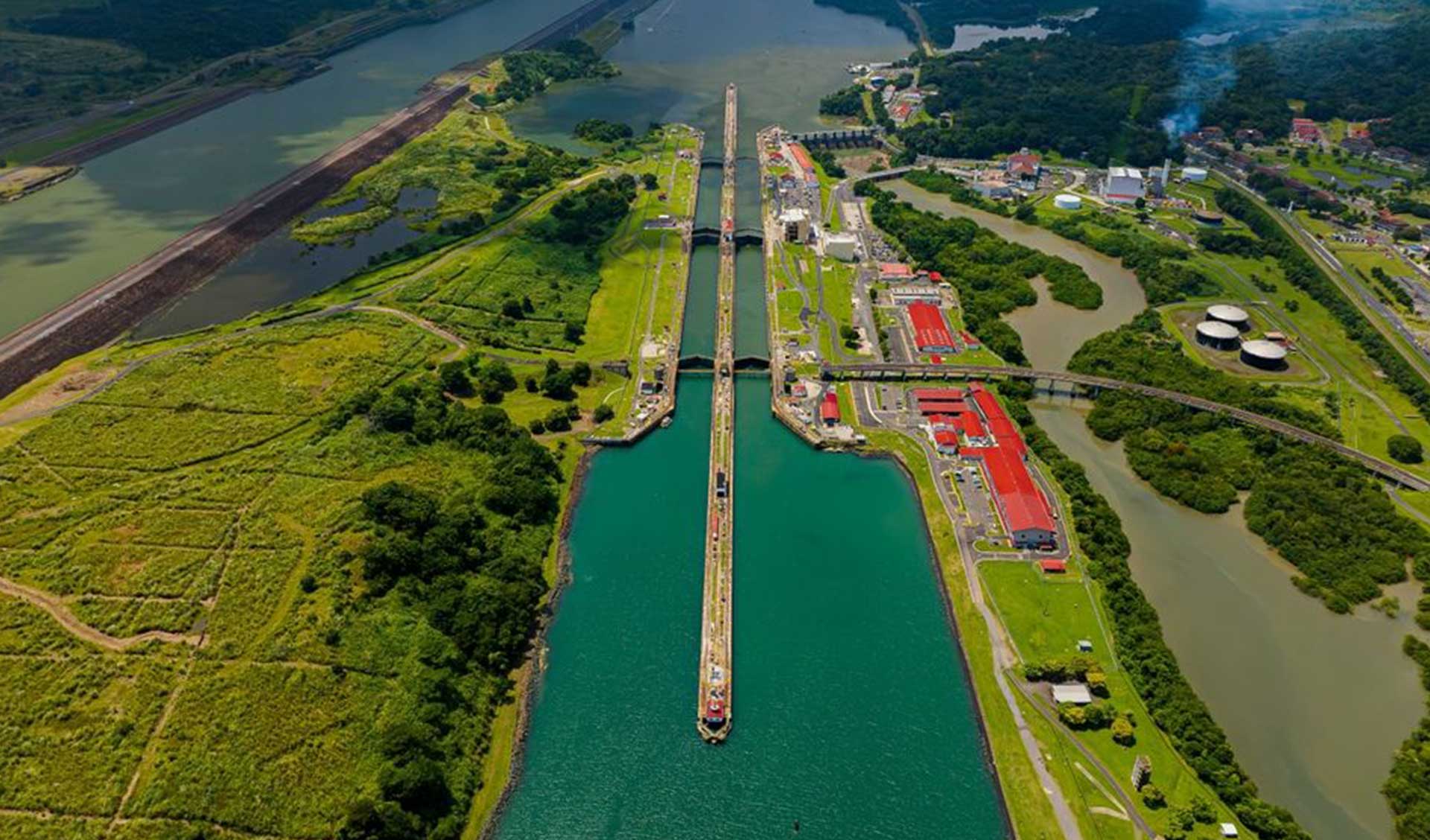
Panama Pulls Canal Port Concessions From CK Hutchison, Installs Maersk and MSC as Interim Operators
Panama has cancelled long-running port concessions held by a Hong Kong-linked operator at two terminals beside the Panama Canal. It has moved to keep the facilities running by handing day-to-day operations to two of the world’s biggest shipping groups.
A notice published by Panama’s government formalized a court-backed decision to annul the contracts covering the Balboa and Cristobal terminals, located on opposite sides of the canal. The concessions had been held for more than two decades by Panama Port Company, a subsidiary of CK Hutchison. A Supreme Court ruling last month found the concessions unconstitutional, and the latest step puts that ruling into effect.
To prevent disruption at a chokepoint that handles a large share of global trade flows, the Panamanian government has temporarily taken control of port assets, including cranes, vehicles, and key IT systems. Authorities said the aim is to ensure continuity while the country prepares a new concession process, which it expects to complete within 18 months.
Under the interim arrangement, Balboa, the terminal on the Pacific side, will be operated by APM Terminals, part of Denmark’s A.P. Moller-Maersk group. Cristobal, on the Atlantic side, will be operated by Terminal Investment, the port operating arm of Mediterranean Shipping Co. (MSC).
A sharp legal and operational break
The shift is unusually abrupt for infrastructure contracts of this scale. Rather than waiting for a new long-term operator to be selected first, Panama has chosen to assume direct control of the facilities and appoint temporary operators to run them in the meantime. The logic is straightforward: port operations cannot pause while legal disputes and procurement processes play out.
At the same time, the move raises immediate questions about liability, contractual obligations, and the legal basis for transferring operational control from the existing concession holder to new operators without an agreed handover. Those questions are now at the center of the dispute.
CK Hutchison has rejected Panama’s action and characterized the executive decree as unlawful. The group said its subsidiary stopped operations at both terminals following the government takeover and indicated it will continue consulting legal counsel on next steps. CK Hutchison has also signaled that it may pursue further legal remedies.
A dispute that turned geopolitical
What began as a domestic legal fight over contract validity has widened into a geopolitical flashpoint, with Panama caught between competing pressures.
The U.S. government has increasingly framed Chinese influence around critical trade infrastructure as a strategic risk, and the Panama Canal is among the most symbolically and economically important points in that debate. Previous U.S. claims that China had an outsized role around the canal helped push the ports issue into a broader narrative about supply-chain security and control over global trade arteries.
At the same time, Beijing has treated the cancellation of the concessions as a hostile move that could reshape its commercial footprint in a region where it has worked to deepen ties through investment and infrastructure. Chinese officials have warned that Panama could face political and economic consequences if it does not reverse course.
Those external pressures matter because Panama’s decision is not happening in isolation. The country is not only managing continuity at two busy terminals, but it is also weighing the broader impact on investment credibility, future bids for concessions, and its relationships with major trading partners.
Why these ports matter
Balboa and Cristobal are strategically positioned. While the Panama Canal is the headline asset, the ports around it are essential for container transfer, storage, and onward shipment. They support the broader logistics ecosystem that keeps cargo moving between the Atlantic and Pacific systems, and they influence how shipping lines plan routes, allocate capacity, and manage schedules.
For global carriers, reliability and speed at these terminals affect costs. Delays do not just slow down one shipment; they ripple through networks, upsetting timetables and equipment positioning. That is why Panama’s emphasis on uninterrupted operations is central to the story, and why the interim operators were drawn from established global leaders with deep operating experience.
What happens next
Three timelines now run in parallel.
First is the operational timeline. Maersk’s APM Terminals and MSC’s Terminal Investment are expected to keep cargo moving under the interim framework. Any early instability, such as staffing gaps, IT handover issues, or disputes over asset access, would quickly draw attention from the shipping industry.
Second is the legal timeline. CK Hutchison’s challenge will likely focus on whether Panama’s takeover and the interim operating arrangement violate contractual protections, due process requirements, or investment safeguards. Arbitration and court proceedings could become prolonged, even if port operations continue uninterrupted.
Third is the concession timeline. Panama says it plans to award a new long-term concession within 18 months. That process will be closely watched by global port operators and investors because it will reveal whether Panama can reset the framework in a way that is legally durable, commercially attractive, and politically sustainable.
The broader takeaway
Panama’s decision signals a decisive shift in who controls key logistics assets at the canal, but it also highlights a growing reality: critical infrastructure deals are no longer judged only on commercial terms. They sit within a broader strategic contest, where legal rulings, political pressure, and supply-chain security concerns can quickly change outcomes.
In the near term, the priority is continuity: keeping the terminals functioning while the legal fight escalates and a new concession process begins. Over the longer term, the larger question is whether Panama can rebuild a stable investment framework for the canal’s surrounding infrastructure without becoming a permanent battleground for great-power rivalry.