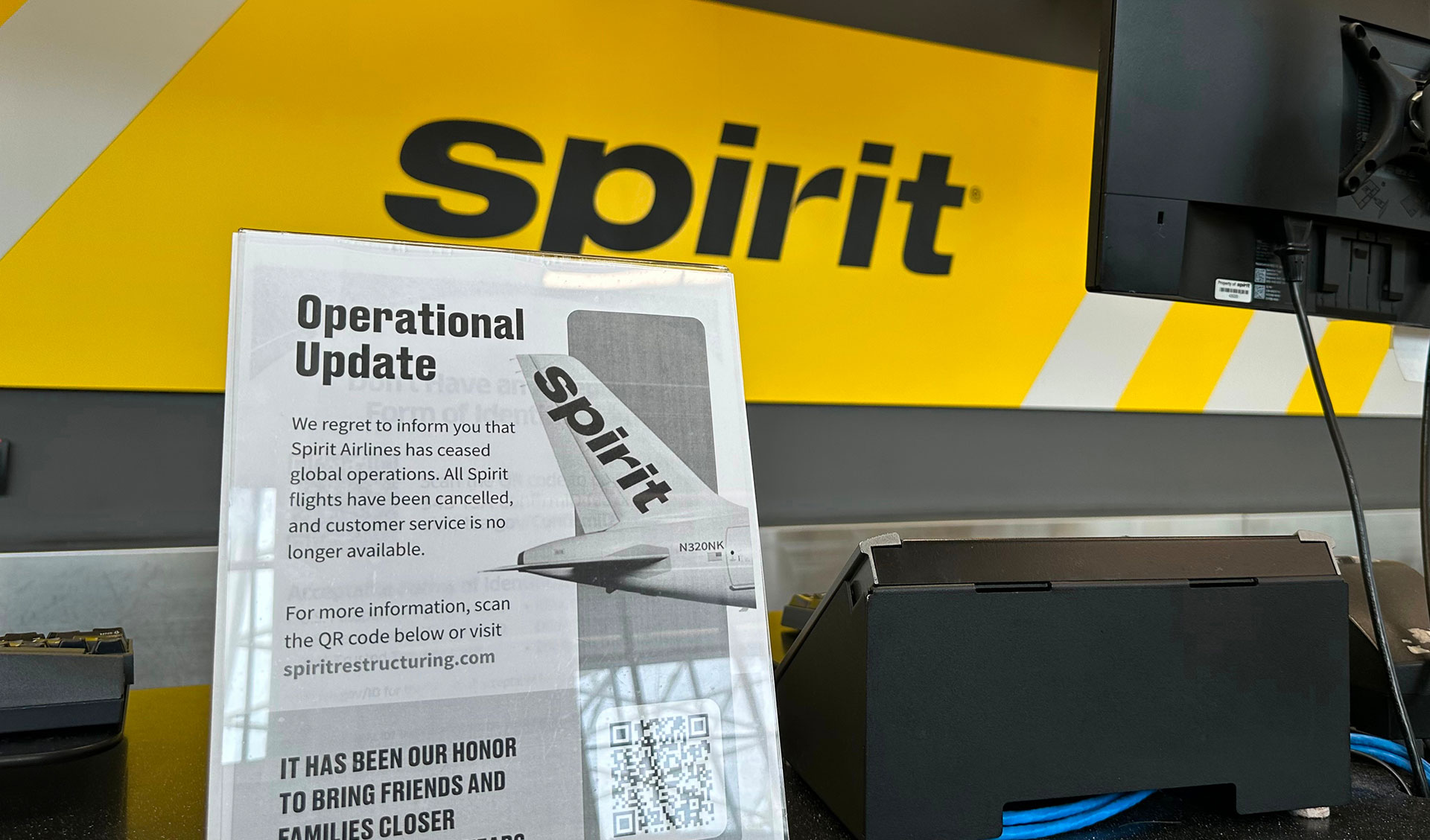
Spirit Airlines Shuts Down, Marking the End of an Era in U.S. Budget Travel
Spirit Airlines has ceased operations after failing to secure a last-minute rescue, bringing down one of the most recognizable names in discount flying in the United States. The shutdown follows failed efforts to reach a deal with creditors and preserve the carrier through bankruptcy, ending a long struggle that had already left the airline weakened, cash-starved, and with limited room to maneuver.
The collapse matters for more than one airline. Spirit helped define the ultra-low-cost model in the U.S., pushing fares lower and forcing larger carriers to respond. Its bare-bones service, low headline prices, and long list of optional fees often drew criticism, but the formula also made flying more affordable for millions of travelers. Even passengers who never booked Spirit often benefited from the pricing pressure it imposed on the rest of the market.
That pressure is now disappearing.
A carrier that reshaped fare competition
For years, Spirit played a disruptive role in the airline industry. Its model was centered on offering the lowest possible base fare, then charging separately for services that other carriers had historically included in the ticket price. That approach appealed to highly price-sensitive customers and helped expand access to air travel, especially on domestic leisure routes.
The model was not popular with everyone, but it was influential. It pushed larger airlines to introduce stripped-down fare categories and to compete more aggressively on price. In that sense, Spirit’s impact extended well beyond its own market share.
But that same model also had a built-in vulnerability. A carrier organized around the lowest possible fare has far less flexibility when operating costs rise. It cannot easily raise prices without undermining its main competitive advantage. Once the industry moved into a more expensive and less forgiving environment, Spirit had little room to absorb the shock.
Why the airline ran out of options
Spirit was already under pressure from multiple directions. A failed merger left it without a strategic exit. Competition remained intense. Consumer preferences shifted in ways that made the most austere travel experience less appealing to some passengers. At the same time, costs were climbing.
Fuel appears to have been the immediate trigger that ended whatever chance of survival remained. Jet fuel is one of the most volatile expenses in aviation, and for an airline already under financial strain, a sharp rise can be decisive. Management made clear that the latest increase in fuel prices sharply worsened the company’s liquidity position. Keeping the airline operating would have required hundreds of millions of dollars in additional cash that it could neither generate internally nor raise from outside sources.
By the time final rescue talks collapsed, Spirit was already dangerously short of cash. The company had been trying to preserve operations while moving through bankruptcy, but the gap between what it needed and what creditors were willing to support had become too wide. Once that happened, shutdown became the only practical outcome. Spirit said all flights were canceled immediately and that customers who bought tickets directly with a card would receive automatic refunds. The closure also affects about 17,000 direct and indirect jobs.
Why a bailout did not happen
The failed rescue says something important about how lenders and policymakers viewed Spirit’s prospects. Distressed airlines can survive if investors believe there is a credible path back to profitability. In Spirit’s case, that confidence appears to have broken down. There were discussions around a government-supported financing package, but no final agreement emerged, and resistance to the deal remained significant.
More fundamentally, even a successful bailout might only have delayed the problem. Spirit was not facing a temporary setback alone. It was dealing with a structurally stressed business model, weak financial flexibility, and a shrinking ability to absorb shocks. This was not just a short-term liquidity issue. It was also a question about whether the airline could realistically return to durable profitability.
What changes for the airline market
Spirit’s disappearance could affect ticket prices in some markets, even though the airline had already been reducing service. Low-fare carriers influence pricing beyond their own size because their presence forces competitors to stay aggressive. Once that force is removed, some of the downward pressure on fares may fade, particularly on leisure-heavy routes where customers are highly price-sensitive.
Other airlines are already stepping in with discounted rescue fares for stranded passengers, and over time, rivals will likely add flights at airports and on routes Spirit once served. Seats can be replaced. What is harder to replace is the pricing discipline Spirit imposed. Other carriers may add capacity without restoring the same fare floor that Spirit helped create.
A broader warning for discount airlines
Spirit’s collapse also raises a larger question about the future of the ultra-low-cost model in the United States. Demand for cheap tickets still exists, but the economics of delivering them have become more difficult. Fuel volatility, tighter financing, high labor costs, and intense competition leave much less room for error than in earlier years.
That does not mean every low-cost airline faces the same outcome. But Spirit’s failure suggests that the weakest operators at the bottom end of the market are now more exposed to shocks than they once were. When costs spike and liquidity dries up, the business can unravel quickly.
What this shutdown ultimately represents
Spirit Airlines is disappearing, but its legacy in the U.S. airline market will last longer. It made flying cheaper, reshaped how fares were sold, and forced competitors to adapt. Its shutdown marks the end of an important chapter in American budget travel. The immediate focus will be on refunds, stranded passengers, and route redistribution. The bigger question is whether Spirit’s collapse proves to be an isolated failure or an early sign that ultra-low-cost flying in the United States has become materially harder to sustain than it was in the era Spirit helped define.